

IMMATERIAL SUBLIME
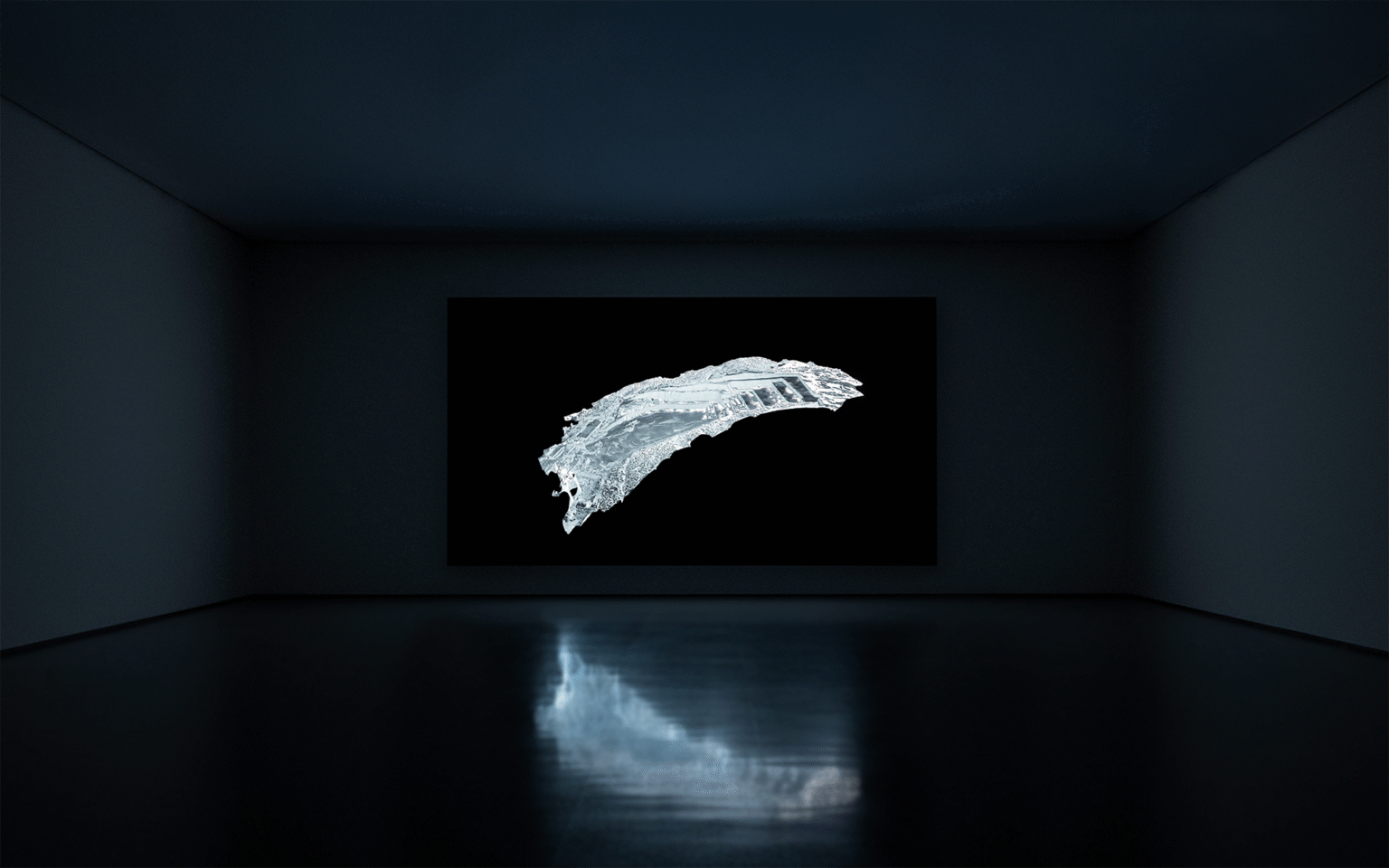
Moving image, 8 minutes.
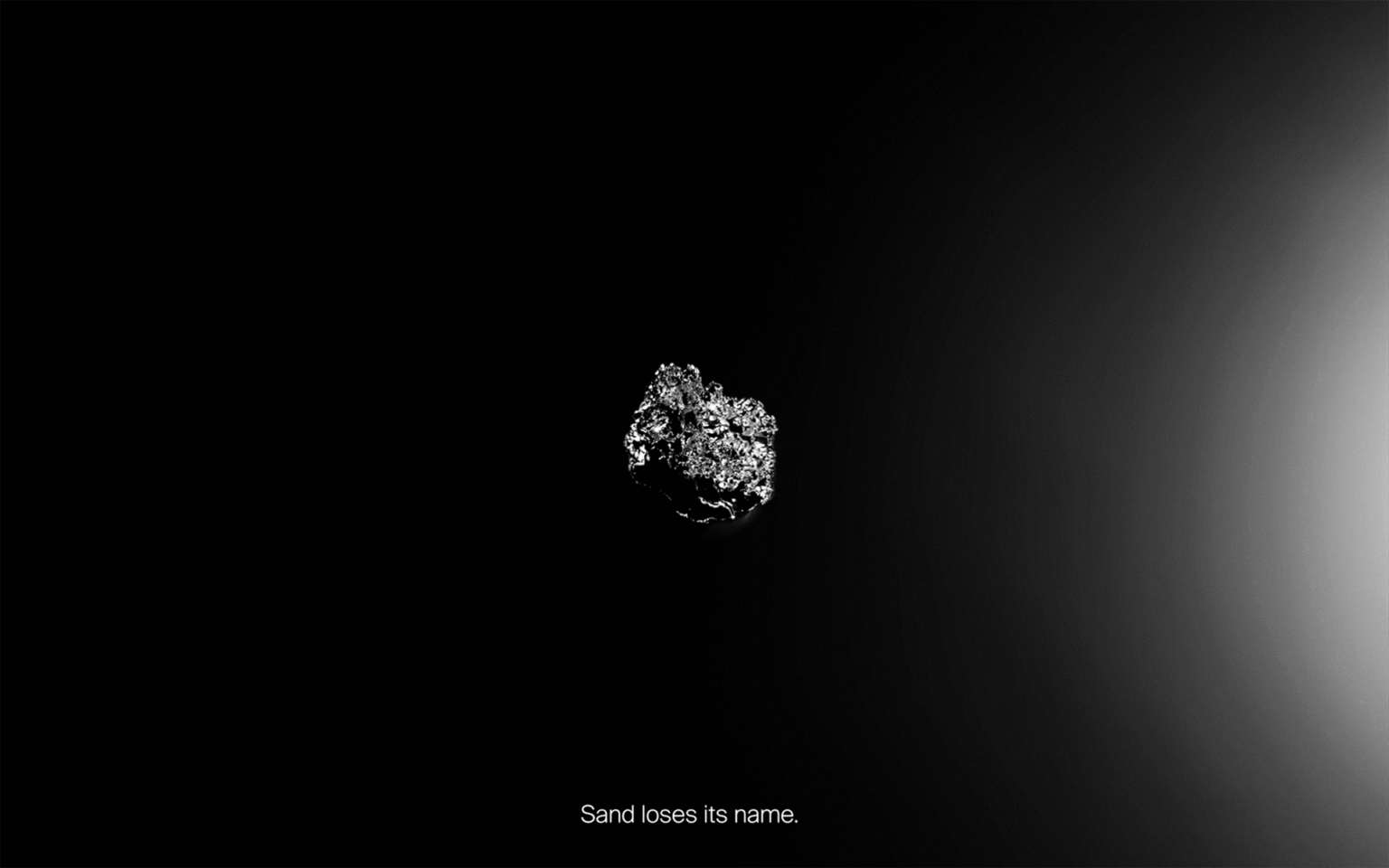
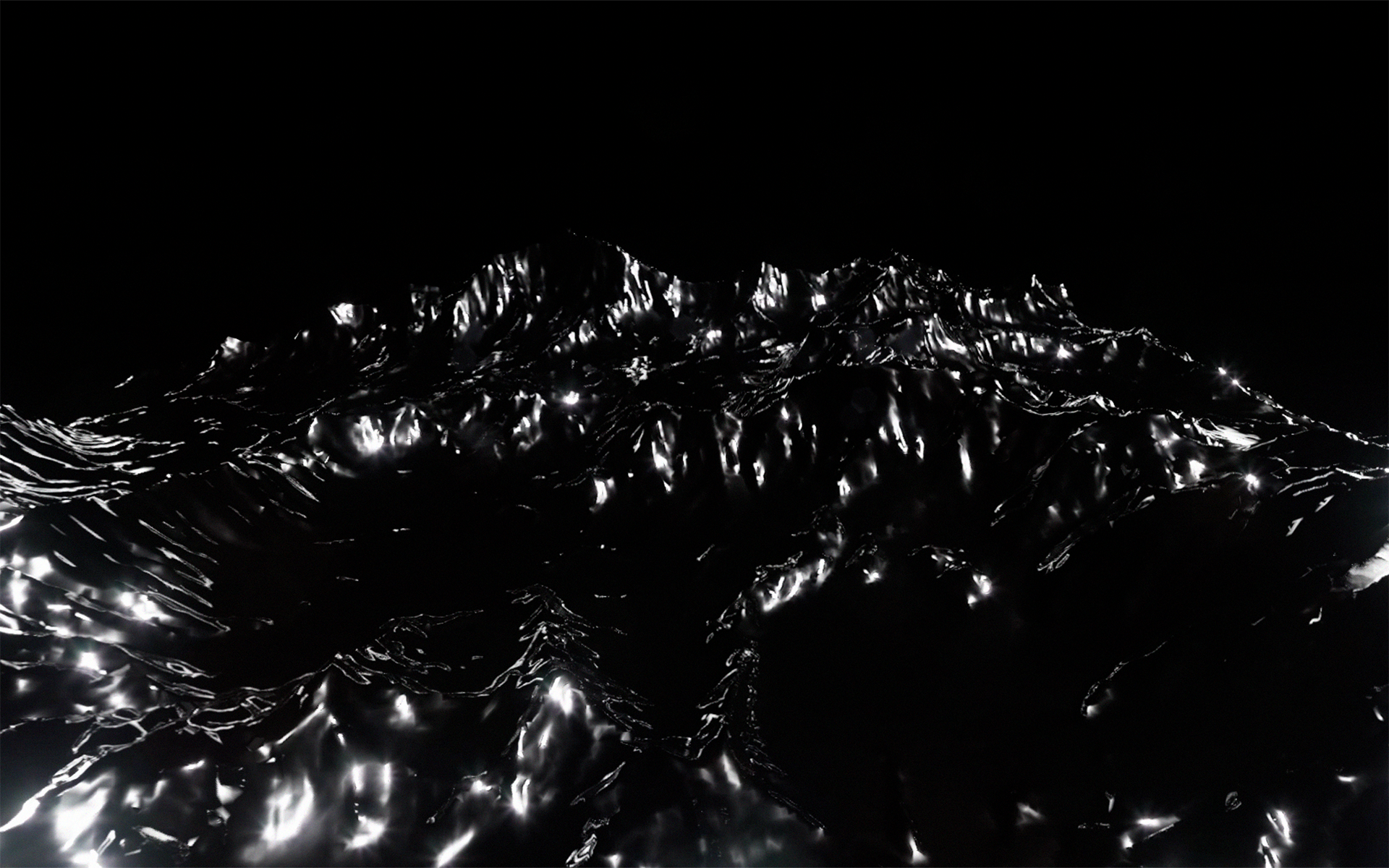
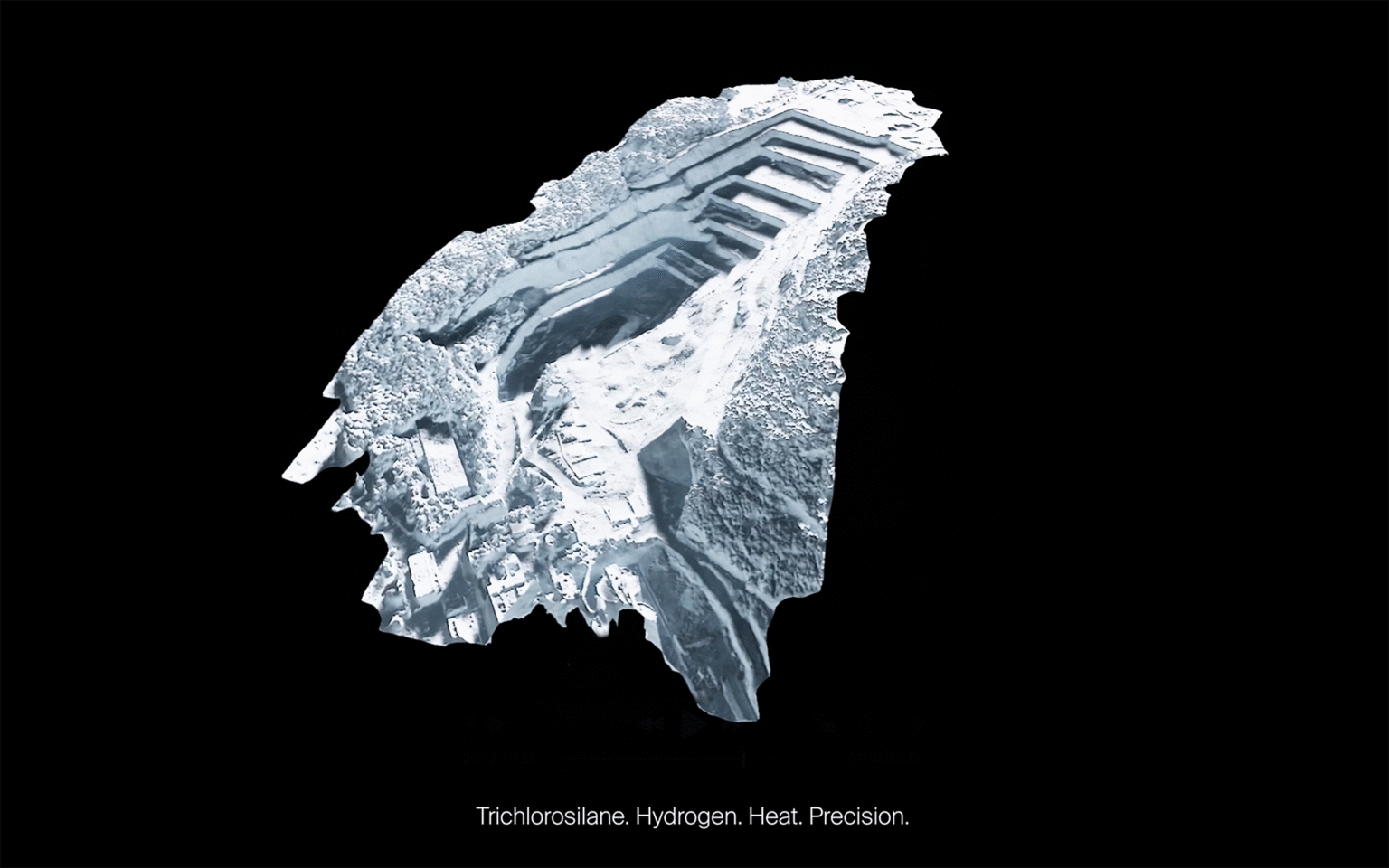
Immaterial Sublime is a work that traces how sand undergoes a process of metamorphosis and transforms from its granular form into a man-made abstraction. Quartz sand, a mineral composed mainly of silicon and oxygen, moves through industrial transformation until it becomes Polysilicon, a highly purified and structured form of silicon that is essential in the production of electronic components. The material exists mid-transformation: quarry extraction, raw quartz processed, from geological reality to purification. Polysilicon becomes silicon wafers, extremely thin and precise circular slices that serve as the base material for computer chips.
Sand gradually loses its name: a material shaped by eons of geological processes becomes a commodity and is valued for its economic and functional use. Industrial architecture rises from ancient deposits. The pure polysilicon, now isolated, floats in exploitation. The technological sublime has changed geological timescales into instantaneous cycles of production. Deep time lies within grains of sand; their crystalline structures encode millions of years of planetary history. The elaborate twenty-seven-step purification process that produces silicon wafers takes this temporality and compresses it, creating devices that operate in microseconds, one-millionth of a second, the blink of an electronic impulse. This work documents compression, traces geology’s patient accumulation into transfigured streams of data.
What, then, remains of sand after its conversion to polysilicon? What is lost or transformed in this encounter between Earth’s deep mineral history and technological production?